
There’s a useful lesson emerging from recent video encoding benchmarks.
The amount of data required to deliver a good picture isn’t fixed. It depends on the content, the codec, the encoding decisions and the quality level you’re trying to achieve.
That seems obvious, but for years many streaming operations treated video assets much the same way.
Content-aware encoding changed the equation.
At Akta, our Enhanced Encoding examines video characteristics at the segment level and adjusts encoding decisions accordingly. The result can be 30–50% less bandwidth consumption while maintaining visual quality.
For streaming operators, that’s an improvement with a direct relationship to delivery costs.
But consider another form of inefficiency that rarely shows up in an encoding benchmark.
A video is ingested into one system, analyzed by another, transferred to an editing application, processed for captions, prepared for distribution and passed through additional systems for scheduling and monetization.
Each product may perform its assigned task well.
The workflow can still be inefficient.
The next challenge in streaming technology is to make the operation as intelligent as the individual products within it.
Imagine a platform that understands video as it arrives.
That information can help determine how the video should be encoded, identify relevant moments, populate metadata, prepare highlights, support advertising decisions and make the content easier to discover.
Now imagine the same platform helping operations teams understand playback problems and recommend corrective actions.
Those capabilities have value independently. Their value increases when they operate together.
That’s the thinking behind Akta’s AI-first architecture.
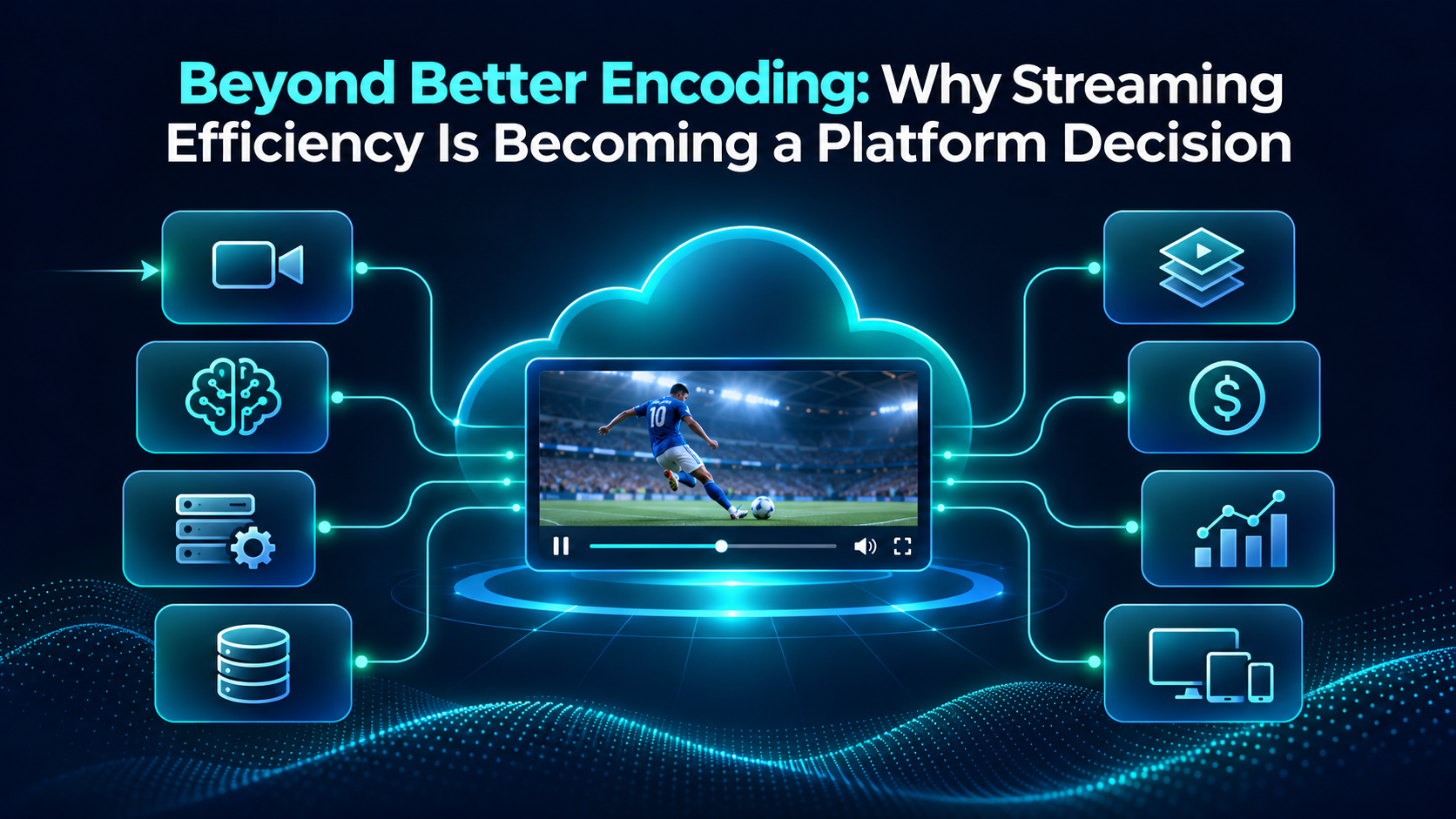
We’re bringing content intelligence, encoding, scheduling, media processing, monetization and analytics into a unified operating environment.
The objective is to reduce the amount of manual work and infrastructure required to manage increasingly sophisticated streaming services.
When comparing technology platforms, it’s worth asking a question that goes beyond individual product specifications:
How many decisions does this platform help us make, and how much work does it eliminate along the way?
A more efficient encoder can reduce delivery costs.
A more efficient operation can improve the economics of the entire streaming business.